In a world driven by technology and innovation, developing a child’s interest in math and science early on can make a lasting impact. Children are naturally curious, constantly asking questions about how things work and why the world behaves the way it does. Math and science toys tap into this curiosity, offering hands-on experiences that turn learning into an adventure. From building sets to interactive experiments, these toys provide practical skills, critical thinking, and creative problem-solving abilities that will benefit children for life.
Math and science toys are not only educational but also highly engaging. They can make abstract concepts tangible and approachable, giving kids the chance to explore, experiment, and discover at their own pace. By turning complex ideas into fun activities, these toys encourage children to enjoy learning while strengthening foundational skills in math, logic, and scientific reasoning.
The Importance of Math and Science Toys
Introducing children to math and science concepts through play is more than just a trend. Early exposure to these subjects helps children build cognitive skills, develop a love for learning, and prepare for future academic success. When children engage in math and science through toys, they are practicing critical thinking and problem-solving in a practical and enjoyable way.
Math toys, for instance, help children grasp fundamental concepts such as numbers, shapes, measurement, and patterns. These foundational skills are critical not only for school success but also for developing logical thinking and analytical skills. Science toys, on the other hand, encourage observation, experimentation, and hypothesis testing. They allow children to explore concepts in physics, chemistry, biology, and engineering while fostering curiosity and creativity.
The benefits extend beyond the classroom. Children who are comfortable with math and science tend to approach challenges with confidence and are more likely to pursue careers in STEM fields. These toys also encourage collaboration, communication, and persistence, essential skills for problem-solving in real-life scenarios.
Types of Math and Science Toys
Math and science toys come in a variety of forms, each designed to stimulate learning differently. Here are some popular categories:
1. Building and Construction Sets
Building sets like LEGO Education kits, K’NEX, and Magna-Tiles are excellent for teaching math and engineering concepts. Children learn about symmetry, balance, geometry, and spatial reasoning as they construct models. These toys encourage logical thinking and allow children to experiment with structures, discovering how different shapes and supports affect stability.
For example, a child building a bridge with a LEGO set learns about weight distribution, angles, and structural integrity without even realizing they are applying engineering principles. Building toys are also highly versatile, offering endless possibilities for creativity and problem-solving.
2. Coding and Robotics Kits
Coding and robotics toys such as LEGO Mindstorms, Botley the Coding Robot, and Osmo Coding allow children to understand programming logic and computational thinking. These toys provide step-by-step instructions that teach sequencing, loops, and conditional statements, all critical elements of computer science.
Robotics kits also introduce basic engineering and electronics concepts. As children assemble robots and code their movements, they gain hands-on experience with sensors, motors, and mechanical structures. These toys make coding tangible, transforming abstract concepts into interactive experiences.
3. Math Manipulatives
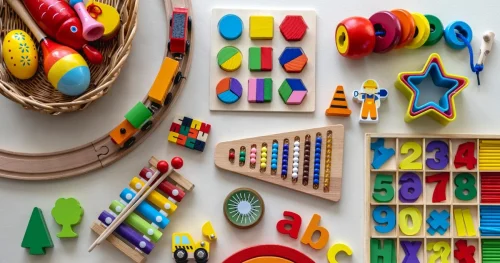
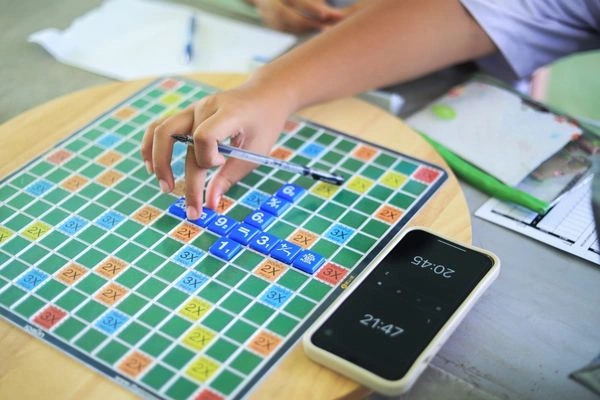
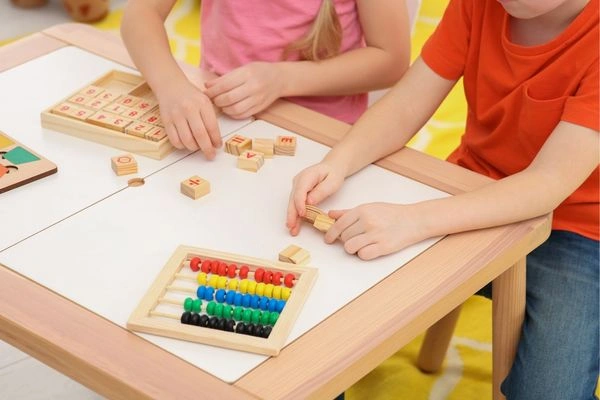
Math manipulatives like counting beads, number tiles, and abacuses make abstract mathematical concepts concrete. Young children can use these tools to visualize addition, subtraction, multiplication, and division. They can also explore patterns, fractions, and geometry through tactile learning.
For instance, using fraction circles allows children to see the relationship between different fractions, helping them develop a deeper understanding than simply memorizing rules. Math manipulatives foster confidence and provide a solid foundation for more advanced mathematical thinking later on.
4. Science Experiment Kits
Science experiment kits such as chemistry sets, crystal growing kits, and volcano kits allow children to conduct experiments safely at home. These toys introduce scientific methods, including hypothesis formation, observation, and data collection. Children can explore chemical reactions, physical changes, and scientific phenomena in a controlled and entertaining way.
Experiment kits also teach problem-solving skills. For example, trying to create the perfect crystal formation or the most realistic volcano eruption requires planning, observation, and adjustments. Children learn that failure is part of experimentation and that persistence leads to success.

5. STEM-Themed Board Games
STEM-themed board games combine social interaction with learning. Games like Math Dice, Robot Turtles, and Gravity Maze challenge children to solve math and science problems in a playful setting. These games encourage strategic thinking, logical reasoning, and teamwork.
Board games provide an alternative learning experience, allowing children to learn collaboratively and apply skills in competitive or cooperative scenarios. They also promote patience, planning, and the ability to anticipate outcomes, all essential for problem-solving.
Benefits of Math and Science Toys
Math and science toys offer a variety of benefits that extend beyond traditional learning. They make abstract concepts accessible, cultivate curiosity, and prepare children for real-world problem-solving. Some of the key benefits include:
- Enhanced Critical Thinking: Children learn to analyze situations, identify patterns, and make decisions based on evidence. Toys that require building, coding, or experimenting encourage thoughtful problem-solving.
- Hands-On Learning: Math and science concepts can be difficult to grasp through lectures alone. Hands-on toys allow children to engage physically with concepts, reinforcing understanding and retention.
- Increased Engagement: Interactive toys are inherently more engaging than traditional worksheets or lectures. When children enjoy learning, they are more likely to retain information and develop a lifelong interest in STEM.
- Creativity and Innovation: Many STEM toys require children to design, build, or program, fostering creativity alongside analytical skills.
- Collaboration Skills: Toys that encourage group play or cooperative problem-solving help children develop communication and teamwork skills.
Choosing the Right Math and Science Toys
When selecting math and science toys, it is important to consider the child’s age, skill level, and interests. Here are some tips to choose the best toys:
- Age Appropriateness: The toy should match the child’s developmental stage. Toys designed for older children can be too complex, causing frustration, while toys for younger children may lack sufficient challenge for older kids.
- Educational Value: Look for toys that teach real-world concepts and skills. Check if the toy encourages experimentation, critical thinking, and problem-solving.
- Safety: Always choose toys that are safe for the child’s age group. Avoid small parts for toddlers and ensure that chemistry or robotics kits are non-toxic and well-supervised.
- Engagement: Children are more likely to learn when they are having fun. Choose toys that are interactive, colorful, and engaging.
- Versatility: Toys that can be used in multiple ways or combined with other kits offer extended learning opportunities and longer playtime value.
Examples of Popular Math and Science Toys
Here are some examples of toys that are widely recognized for their educational benefits:
- LEGO Education Kits: Teach engineering, geometry, and problem-solving through creative building challenges.
- Osmo Genius Kit: Combines physical game pieces with tablet technology to teach math, coding, and problem-solving.
- Botley the Coding Robot: Introduces coding fundamentals to young children without the need for screens.
- National Geographic Crystal Growing Kit: Allows children to experiment with chemistry and geology while creating beautiful crystals.
- Gravity Maze by ThinkFun: A logic game that challenges children to solve puzzles and understand physics concepts.
- Math Dice by ThinkFun: Encourages mental math skills in a fun, competitive way.
These toys are designed to capture children’s interest while providing meaningful educational experiences.
Making Learning Fun at Home
Math and science toys work best when combined with supportive parental engagement. Parents can encourage curiosity by asking questions, making predictions, and celebrating successes. Incorporating toys into daily routines, such as cooking experiments, building projects, or math games, helps children see the practical applications of what they learn.
For example, using a measuring cup to experiment with different amounts of water and baking soda during a kitchen experiment introduces math, science, and observational skills simultaneously. Similarly, constructing a LEGO bridge can spark discussions about engineering principles in everyday life.
Creating a playful learning environment also fosters confidence. Children are more willing to take risks, test hypotheses, and explore new ideas when they feel supported and encouraged.
The Long-Term Benefits
Math and science toys do more than entertain. They equip children with skills that will serve them throughout life. Early exposure to STEM concepts improves academic performance, encourages curiosity, and nurtures a problem-solving mindset. Children who engage with these toys are better prepared for school challenges and future STEM careers.
These toys also help children develop resilience. Learning through experimentation teaches that mistakes are valuable opportunities for learning, fostering persistence and adaptability. The combination of fun and education ensures that children develop a positive relationship with math and science from an early age.
Lasting Impact of Math and Science Toys on Learning
Math and science toys are essential tools for nurturing curiosity, creativity, and critical thinking in children. They make abstract concepts tangible, encourage exploration, and provide practical skills that go far beyond the classroom. From building and coding kits to science experiments and math manipulatives, these toys make learning enjoyable, interactive, and impactful.
By selecting age-appropriate, engaging, and educational toys, parents and educators can cultivate a lifelong love of learning. Math and science toys are not just playthings; they are investments in a child’s future, fostering skills, confidence, and curiosity that will support them for years to come. Encouraging children to explore, experiment, and problem-solve today lays the foundation for tomorrow’s innovators and thinkers.