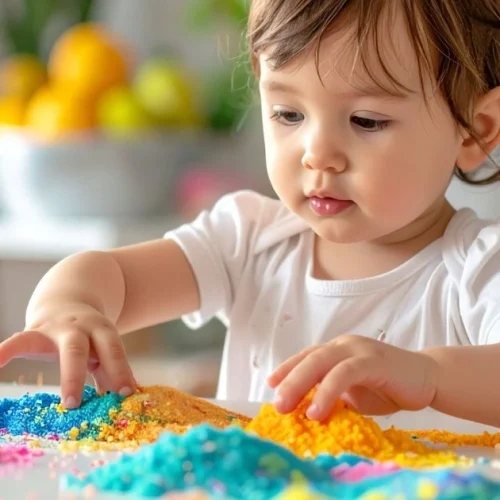
Toy storage is one of the biggest challenges after gift-giving occasions. Birthdays, holidays, and special celebrations often bring a surge of new toys into homes. Without proper organization, playrooms, bedrooms, and living areas can quickly become cluttered, creating stress for both parents and children. Efficient toy storage not only keeps spaces tidy but also encourages children to value their belongings, develop organizational skills, and enjoy their toys more fully.
This guide explores practical, stylish, and innovative toy storage ideas to manage the influx of toys after gifting events. It covers solutions for different age groups, room layouts, and toy types, and offers tips for encouraging children to help keep their space organized.
Why Toy Storage Matters
Effective toy storage goes beyond aesthetics. Well-organized toys offer several benefits:
1. Encourages Responsibility and Independence
When toys have designated spaces, children can learn to put items away after use. Clear bins, labelled shelves, and categorized storage help children understand where things belong, fostering responsibility and independence.
2. Reduces Stress and Overwhelm
Clutter can be overwhelming for both children and parents. A tidy play area creates a sense of calm, reduces arguments over lost items, and makes cleanup easier.
3. Extends the Life of Toys
Proper storage protects toys from damage. Soft toys in baskets, building sets in labeled containers, and electronic toys in sturdy bins can last longer, preserving both their appearance and functionality.
4. Makes Playtime More Enjoyable
Organized toys are easier to find and access, encouraging creativity and uninterrupted play. Children can focus on the fun instead of searching for missing pieces or getting frustrated by clutter.
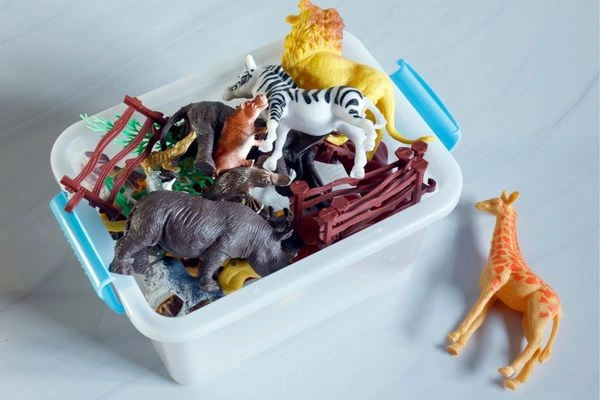
Categorizing Toys Before Storage
Before exploring storage solutions, it is essential to categorize toys. Sorting toys by Type, 1Size, or frequency of use can make storage more efficient and retrieval easier.
1. By Type
- Building blocks and construction toys
- Dolls and action figures
- Vehicles and train sets
- Arts and craft supplies
- Board games and puzzles
- Electronic toys and gadgets
2. By Size
Large toys such as playhouses, ride-ons, and sports equipment may require floor space or specialized storage. Smaller toys, like figurines and game pieces, are best kept in small bins or drawers.
3. By Usage
Frequently used toys should be easily accessible, while seasonal or rarely used toys can be stored higher up or in less prominent areas.
Storage Solutions for Different Rooms
1. Playrooms
Playrooms are often the central hub for children’s toys, and they benefit from flexible, multi-functional storage solutions.
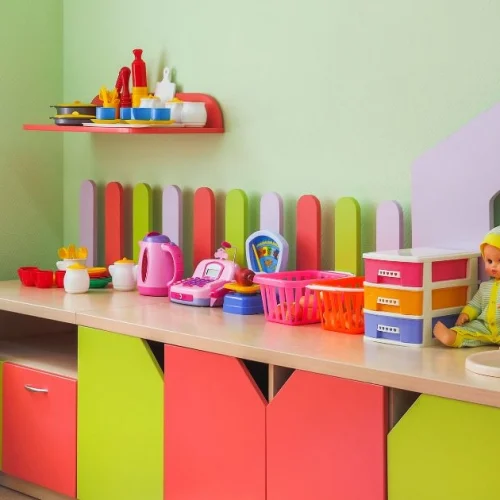
- Open Shelving: Open shelves make toys visible, allowing children to select items easily. Using clear bins or baskets on the shelves adds uniformity while keeping items contained.
- Toy Cubbies: Cubbies with labelled bins can separate toys by category. Labels can be pictures for younger children or words for older kids to encourage reading.
- Rolling Carts: Multi-tiered rolling carts can hold art supplies, puzzles, or small toys. They are portable, allowing toys to move with play sessions or tidy up quickly.
- Activity Stations: Some playrooms benefit from furniture with built-in storage, such as tables with drawers for craft supplies or benches with lift-top compartments for board games.
2. Bedrooms
Bedrooms often have limited space, so storage solutions need to maximize floor area while keeping toys accessible.
- Under-Bed Storage: Flat storage bins or drawers can slide under beds, keeping toys out of sight but within reach. This is ideal for stuffed animals, building sets, or seasonal toys.
- Closet Organizers: Adjustable shelves, hanging organizers, and labelled bins can transform a bedroom closet into a multi-functional toy storage zone.
- Bedside Bins: Small baskets or bins near the bed let children quickly store their favourite bedtime toys and keep the room tidy overnight.
3. Living Areas
For homes where toys extend into the living room, solutions need to balance aesthetics and functionality.
- Storage Ottomans and Benches: These double as seating and hidden storage for toys, books, or puzzles. They help integrate play areas seamlessly into family living spaces.
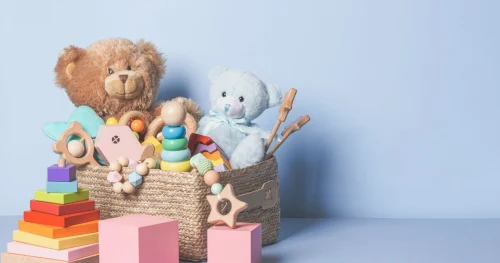
- Decorative Baskets: Stylish baskets can hold larger toys, stuffed animals, or sports equipment. They keep clutter contained without compromising the room’s decor.
- Media Cabinets: Multi-purpose cabinets can store electronic toys, gaming devices, or smaller board games, keeping wires and gadgets organized.
Creative Toy Storage Ideas
1. DIY Solutions
Do-it-yourself projects allow customization and often save money.
- PVC Pipe Organizers: Cut and stack PVC pipes for toy cars, small balls, or action figures. Each section holds multiple toys, creating a playful visual display.
- Pegboards: Wall-mounted pegboards with hooks and baskets can store everything from dress-up accessories to art supplies. This solution makes use of vertical space and adds an interactive element to storage.
- Repurposed Furniture: Old bookshelves, wine crates, or dresser drawers can be painted and turned into toy organizers, giving furniture a second life.
2. Vertical Storage
Using vertical space is crucial in smaller rooms or apartments. Wall-mounted shelves, hanging baskets, or tall cabinets keep floor space clear while providing ample storage. Vertical solutions also encourage children to reach and stretch, adding a physical element to cleanup.
3. Rotational Storage
Rotational storage involves keeping only a portion of toys accessible at a time while storing the rest. This approach reduces clutter and keeps playtime fresh. Rotate toys every few weeks, bringing new items out while others are stored, renewing interest without overwhelming the child.
Storage for Specific Types of Toys
1. Building Sets and Blocks
- Stackable bins or clear plastic containers with compartments keep pieces sorted by Size and colour.
- Toolboxes or tackle boxes work well for LEGO sets, providing portability and easy sorting.
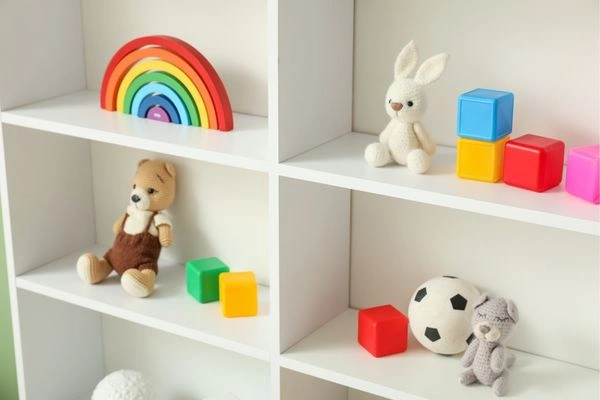
2. Stuffed Animals
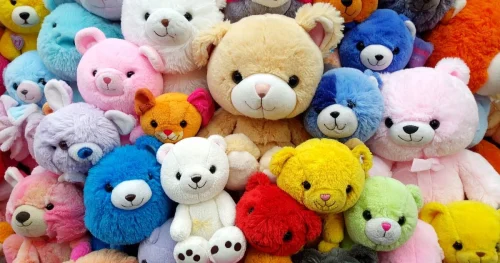
- Mesh hanging bags, beanbag storage, or large fabric bins keep plush toys contained while allowing children to see and access their favourites.
- A hanging hammock in a corner can display stuffed animals while keeping the floor uncluttered.
3. Board Games and Puzzles
- Vertical magazine racks or crate-style shelving make board games easy to grab and store without taking up much floor space.
- Label boxes and keep small parts in zippered pouches to prevent loss.
4. Art and Craft Supplies
- Clear plastic drawers, rolling carts, or compartmentalized boxes allow children to see easily and access markers, crayons, glue, and paper.
- A wall-mounted supply station can keep craft items organized and off tables and floors.
5. Electronic Toys
- Cord organizers and small bins help keep electronic gadgets, tablets, and gaming accessories neatly arranged.
- Sturdy plastic boxes with lids prevent small pieces and accessories from being lost or damaged.
Encouraging Kids to Participate in Toy Organization
Toy storage works best when children are actively involved in maintaining it. Strategies include:
- Labelling with Pictures: Young children respond well to visual cues. Pictures on bins and drawers show where items belong.
- Colour Coding: Assigning specific colours to toy categories makes cleanup easy and visually appealing.
- Cleanup Routines: Establish a daily or weekly routine to turn organization into a habit rather than a chore.
- Reward Systems: Small incentives or charts can motivate children to tidy up after playtime.
- Choice and Ownership: Allow children to choose where certain toys are stored. Giving them control encourages responsibility and pride in their organized space.
Safety Considerations in Toy Storage
- Storage units must be stable to prevent tipping. Anchoring tall shelves to the wall enhances safety and reduces the risk of accidents.
- Avoid small bins or containers with tight-fitting lids for young children to prevent accidents or difficulty opening them.
- Keep hazardous items, batteries, and cords out of reach of toddlers.
- Regularly inspect bins and storage solutions for wear and tear, ensuring everything remains safe and functional.
Maximizing Play Space with Multi-Functional Storage
Combining storage with furniture and decor can create a more functional and attractive play area. Ideas include:
- Storage Benches: Offer seating and hidden toy storage in one unit.
- Convertible Tables: Tables with lift-top storage allow art supplies or building blocks to be hidden when not in use.
- Cubby Walls: Modular cubby systems can serve as room dividers, display units, and toy storage all at once.
- Rolling Storage Carts: Mobile carts can travel from room to room, keeping toys accessible where needed and out of sight when not in use.
Sustainable and Eco-Friendly Toy Storage
Modern parents often prioritize sustainability in home organization. Consider these options:
- Wooden Bins and Shelves: Durable and long-lasting, wooden furniture can be passed down or repurposed.
- Fabric Storage Bins: Made from recycled materials or natural fabrics, these bins are lightweight, washable, and eco-friendly.
- Upcycling Containers: Repurpose jars, crates, or boxes for toy storage instead of buying new plastic containers.
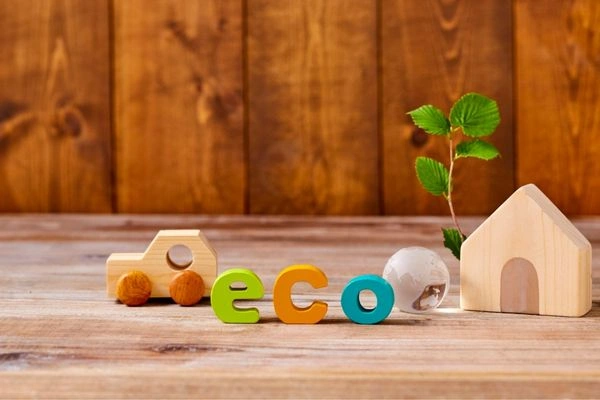
Sustainable storage choices reduce environmental impact while still providing practical solutions for organizing toys.
Maintaining Organization Over Time
The key to long-term success is regular maintenance.
- Conduct seasonal toy reviews and donate any unused or broken items.
- Rotate toys to maintain interest and reduce clutter.
- Labelling, categorizing, and teaching children to put toys away immediately after use prevent clutter buildup.
- Schedule quarterly organization days to reassess storage needs and adjust furniture or bins accordingly.
Creating Organized and Joyful Play Spaces
Effective toy storage after gifting is about more than neatness. It provides children with a sense of order, responsibility, and pride in their belongings. By categorizing toys, selecting the right storage solutions for different rooms, and involving children in cleanup routines, clutter can be transformed into an organized and enjoyable play environment.
From open shelving and labelled bins to multi-functional furniture and creative DIY solutions, there are countless ways to manage toys in style. Thoughtful toy storage protects investments, encourages learning, and ensures that playtime remains fun and stress-free. With the right strategies in place, new gifts become part of a well-organized, safe system ready for hours of imaginative play.
Organizing toys is not just about tidiness—it is about creating spaces where children can explore, learn, and enjoy the gifts they have received. Implementing practical storage solutions ensures that after every birthday, holiday, or special occasion, toys bring joy rather than chaos.