Strategy board games for kids are more than just an enjoyable way to spend an afternoon. They help children build critical thinking, planning skills, social interaction, and patience while offering screen‑free playtime that fosters family connection and cognitive growth. This year, the world of board games for kids continues to expand with diverse titles suitable for different ages, interests, and levels of strategy understanding, from lightweight games for preschoolers to more complex options that challenge older children and even adults.
This comprehensive guide explores the newest trends, top recommended games by age group, educational advantages, and practical tips for selecting the best strategy board games for kids. Whether you are building your child’s first game collection or adding deeper strategy titles to a family game night rotation, this article offers valuable insight and inspiration.
Why Strategy Board Games Matter For Kids
Board games that require strategy are powerful tools for learning. They engage multiple cognitive processes, helping children develop problem‑solving, planning, pattern recognition, and decision‑making skills in ways traditional classroom activities may not always address. Research and child development experts highlight that games encourage children to think ahead, consider consequences, adapt tactics, and respond creatively to unexpected challenges. Additionally, playing games together strengthens communication, cooperation, and emotional regulation, since kids learn to handle winning and losing with grace.
Studies also emphasize the value of screen‑free play, particularly in an era where digital entertainment dominates much of children’s free time. Board games offer opportunities for direct social interaction, negotiation, and storytelling, which contribute to deeper learning and stronger family ties.

How To Choose Strategy Board Games For Kids
When selecting strategy games for children, several key factors help ensure a well‑matched choice:
Age Range and Skill Level: Choose games that align with your child’s cognitive and emotional abilities. Younger kids need simpler rules and quicker play, while older children can handle more complex mechanics and longer sessions.
Educational Value: Look for games that integrate learning concepts such as logic, numbers, spatial reasoning, planning, and resource management.
Engagement and Replayability: Games with variety and evolving strategies hold a child’s interest longer. Features like variable setups, multiple paths to victory, and adaptive difficulty enhance longevity.
Playtime and Patience: Kids have different attention spans, so balancing playtime with challenge is crucial. Games that are too long or too complex can feel discouraging.
Finally, consider whether the game promotes competition, cooperation, or a mix. Collaborative games can be great for teamwork, while competitive ones can teach goal‑setting and strategic thinking.
Strategy Board Games For Younger Children
Younger children, usually under eight years old, benefit most from strategy games that combine simple rules with satisfying decisions. These games introduce foundational strategic thinking without overwhelming players.
Cooperative Treasure Hunts
Peaceable Kingdom Race to the Treasure is a standout cooperative strategy game designed to teach teamwork, spatial reasoning, and simple planning. Players work together to navigate through a maze of cards to reach a treasure before the ogre gets there. Because it is collaborative, kids learn to plan together and share ideas without the pressure of direct competition. Cooperative games like this are especially helpful for younger kids who can sometimes struggle with direct head‑to‑head competition.
Pattern Recognition And Spatial Logic
The Mattel Blokus Game combines bright, colourful pieces with strategic placement. The goal is to place as many of your pieces on the board without touching others of the same colour except at the corners. This seemingly simple rule teaches kids to think spatially, anticipate opponents’ moves, and balance short‑term placement with a long‑term area control strategy. Players must adapt as the board fills up, making each game dynamic and engaging.
Classic Logic And Pattern Play
Connect 4 Board Game, while often seen as a classic, still challenges kids to think several moves ahead. Players take turns dropping colored discs into a vertical grid, aiming to connect four in a row. Success requires reading opponents’ plans and spotting opportunities proactively. Although the rules are easy, mastering even the basic strategies enhances logic and foresight.
Growing Skillset With Mid‑Level Strategy Games
As children get older, typically ages 8 and up, they can enjoy games with deeper strategic elements and more varied play styles. These games introduce resource management, territory building, and multi‑stage decision making that offer satisfying challenges without overwhelming complexity.
Tile‑Laying Territory Builders
Cascadia Board Game is a visually appealing tile-laying and habitat-building game suitable for a wide range of ages. Players place tiles representing landscapes and wildlife in strategic arrangements to earn points, promoting skills such as pattern recognition, planning, and forward thinking. The game accommodates different group sizes, offering flexibility for varied play settings and extended replay value.
Creative Building And Resource Strategy
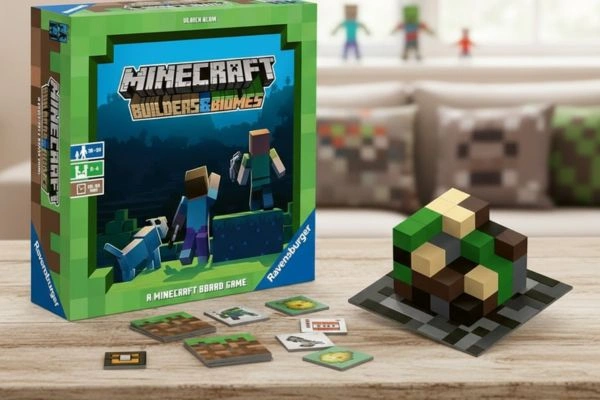
Minecraft Builders and Biomes brings the beloved Minecraft universe into a board game format. Players collect resources, plan builds, and manage their landscape in ways that mirror digital gameplay, but with tangible pieces and face‑to‑face interaction. This game encourages kids to plan resource allocation, weigh choices, and anticipate opponents’ moves as they develop their own biomes.
Award‑Winning And Critically Acclaimed Titles
Some strategy games for children have also earned awards and high praise from critics and gaming communities, blending fun with rich learning opportunities.
Dragomino: Simple Yet Strategic Exploration
Dragomino is a tile‑laying game in which players explore landscapes to discover baby dragons. It originated as a kids’ spin on the popular Kingdomino. As kids choose where to place tiles to match landscapes and collect dragon eggs, they must balance exploration with resource efficiency. Dragomino won the 2021 Kinderspiel des Jahres, a prestigious board game award, recognizing its quality design and appeal for younger players.
Quacks & Co.: Quedlinburg Dash
This award‑winning children’s racing game combines strategic decision-making with delightful gameplay. Players draw chips from a bag to advance their animals along a track, but choices about which chips to include each turn affect their chances. The game won the 2022 Deutscher Kinderspiele Preis, highlighting its clever design tailored for kids as young as six.
Cooperative Strategy Games For Family Play
While many games focus on competition, cooperative strategy games help kids learn teamwork, shared planning, and communication. These titles are perfect when the goal is to solve a problem together rather than compete against siblings or friends.
Collaborative Adventures And Problem Solving
Games where all players win or lose together can be powerful learning tools. Kids work together to meet shared goals, encourage each other, and build joint strategies. This type of play reduces stress over losing, promotes empathy, and strengthens cooperative problem-solving.
Titles such as cooperative mystery games or adventure quests give opportunities for kids to contribute unique skills and ideas. They often involve turn sequencing, risk assessment, and sharing of duties to defeat a scenario or beat a challenge.
Board Game Benefits Beyond Strategy
While strategy games specifically enhance planning and logic, many board games also foster a range of developmental skills:
Language and Communication: Discussing rules, narrating game themes, and negotiating moves help improve vocabulary and expressive language.
Math and Pattern Skills: Counting points, managing resources, and mapping layouts strengthen early math understanding and spatial reasoning.
Social Skills: Turn-taking, following rules, patience, and respectful winning and losing teach emotional intelligence and cooperation.
Focus and Attention: Strategy games often require concentration and delayed gratification, helping children build the mental endurance to see a plan through to the end.
Tips For Introducing Strategy Games To Kids
Selecting the right strategy game is part of the fun, but introducing the game correctly helps ensure kids enjoy the experience and stick with it.
Start With Shorter Sessions
Begin with games that take 15 to 30 minutes. Shorter playtime matches many kids’ attention spans while still delivering rich strategic learning. As experience grows, gradually introduce titles with longer sessions.
Play Together First
Children often learn games better when adults play alongside them the first few times. This builds confidence, clarifies rules, and makes the experience collaborative rather than intimidating.
Adapt Rules To Your Group
Rules can be flexible. For very young players, simplifying scoring or removing complex options can make games more accessible without losing the strategic core.
Encourage Reflection After Play
Ask kids what choices they made and why. Helping them articulate a strategy deepens their understanding and encourages metacognition.
Strategy Board Games By Age Group
Here is a quick reference to help families choose strategy games that match developmental stages:
Ages 4–6: Cooperative games, simple placement or movement strategies, and pattern play (e.g., Race to the Treasure).
Ages 6–8: Tile‑laying games and introductory resource management (Dragomino, Blokus).
Ages 8–12: More complex planning and territory building (Cascadia, Minecraft Builders and Biomes).
Teens and Family Play: Advanced strategy titles adaptable for kids (including family versions of classic strategy games).
Building Young Minds Through Strategy Play
Strategy board games remain one of the most engaging and educational forms of tabletop play for kids. They offer screen‑free fun while enhancing key cognitive, social, and emotional skills. As this year unfolds, game designers continue to innovate, offering fresh mechanics, cooperative experiences, and beautifully designed games suitable for all ages.
From cooperative treasure hunts and spatial puzzles to deeper planning games that grow with your child, strategy board games can become a cherished part of family life. With thoughtful selection and shared playtime, these games do more than entertain. They help shape thoughtful, creative, and strategic thinkers ready to navigate challenges beyond the game board.